
Hiring the right employees is one of the most important responsibilities of any organisation. A skilled and trustworthy workforce helps businesses maintain productivity, protect sensitive information and build strong relationships with customers. However, hiring decisions based only on resumes and interviews may not always provide a complete picture of a candidate’s background.
This is where background check verification becomes important. It helps employers confirm important information provided by job applicants before making final hiring decisions. From employment history and educational qualifications to identity and address details, background verification helps businesses make more informed recruitment decisions.
For organisations looking to strengthen their hiring process, Cityintelligence supports the importance of reliable background screening and verification practices.
What Is Background Check Verification?
Background check verification is the process of checking and confirming information about an individual through relevant records, documents and authorised sources. Employers commonly use this process during recruitment to verify whether the details shared by candidates are accurate.
The purpose of background verification is not simply to identify incorrect information. It also helps businesses reduce hiring risks, maintain workplace security and build a reliable workforce.
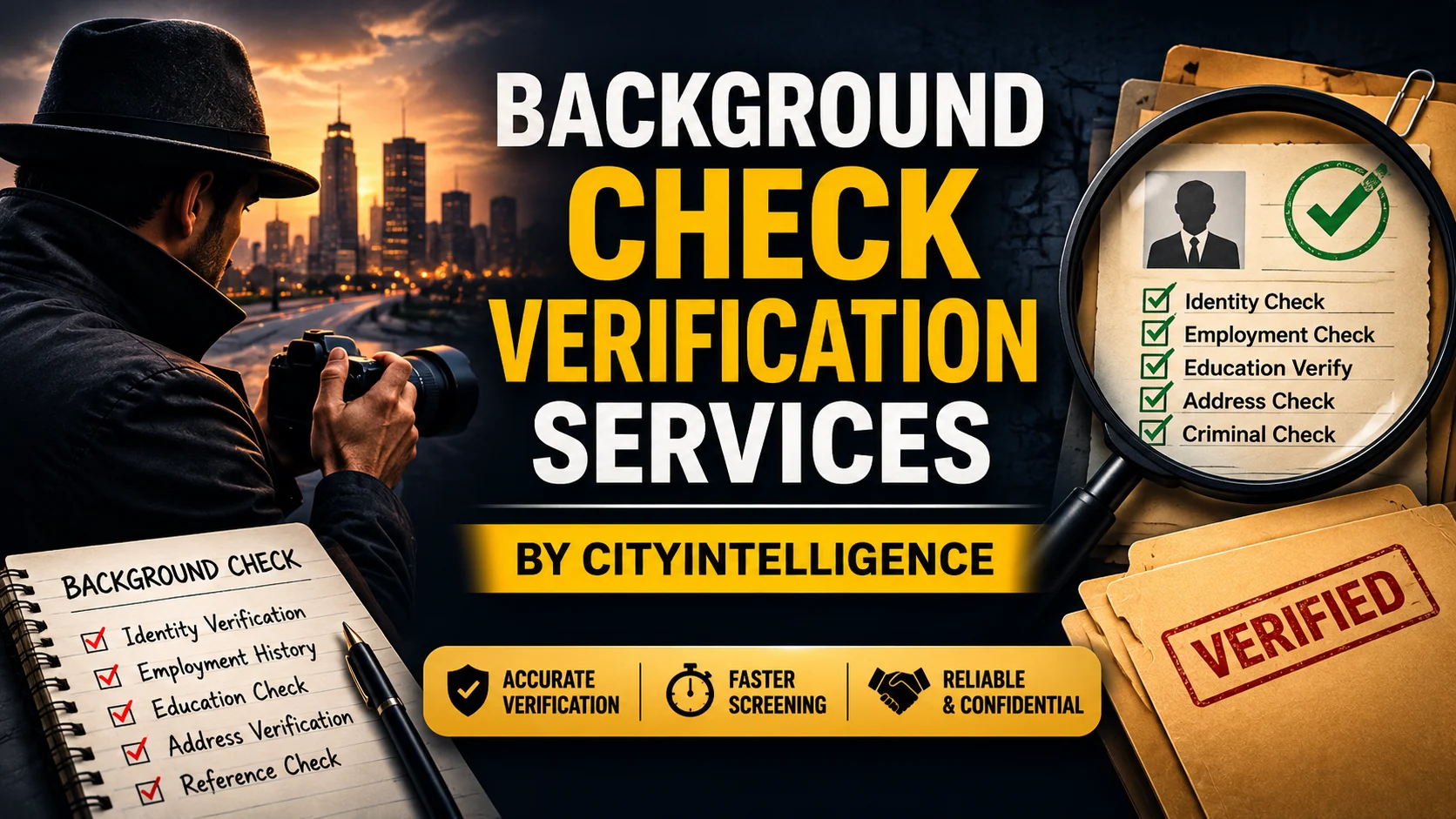
A typical background verification process may include:
- Identity verification
- Previous employment verification
- Educational qualification checks
- Address verification
- Criminal record checks, where legally permitted
- Professional reference verification
- Other role-specific checks
The checks required may vary depending on the job role, industry, company policies and applicable legal requirements.
For example, a financial organisation may require additional screening for positions involving sensitive financial information. Similarly, a company hiring employees for customer-facing roles may focus on identity, employment history and professional references.
A structured verification process allows employers to make hiring decisions using information that has been checked rather than relying entirely on candidate declarations.
Why Is Background Verification Important for Businesses?
Recruitment involves significant investments of time, money and resources. Hiring an unsuitable candidate can affect business operations, employee performance and workplace trust.
Background verification helps organisations identify potential concerns before completing the recruitment process.
1. Helps Reduce Hiring Risks
One of the main benefits of background check verification is identifying discrepancies in candidate information.
For example, an applicant may provide incorrect employment dates, inaccurate educational details or incomplete professional information. Verification allows employers to review these differences before making a final decision.
This reduces the possibility of hiring someone based on misleading information.
2. Supports Workplace Safety
Employee safety is a major concern for organisations across different industries.
Depending on the position and applicable laws, appropriate background screening may help employers assess relevant risks associated with certain responsibilities.
This can be particularly important for positions involving vulnerable individuals, confidential information, financial responsibilities or access to restricted facilities.
3. Protects Business Reputation
Employees represent the organisation they work for. Their professional behaviour and actions can influence customer confidence and business relationships.
A proper background verification process supports responsible recruitment practices and helps organisations maintain professional standards.
4. Improves Recruitment Decisions
Interviews and resumes provide useful information about a candidate’s skills and experience. However, they do not always confirm whether the information is accurate.
Verification provides an additional layer of information that helps HR teams assess candidates more carefully.
5. Supports Compliance Requirements
Some industries have specific employee screening requirements based on regulatory obligations, contractual commitments or internal security policies.
A documented background verification process can help organisations demonstrate that appropriate screening procedures have been followed.
Businesses should ensure that their verification practices comply with applicable privacy, employment and data protection laws.
Different Types of Background Verification Checks
Background screening is not a single activity. It includes different checks that help employers verify specific aspects of an individual’s background.
Identity Verification
Identity verification confirms whether a candidate’s identity details match the documents and authorised records used for screening.
This may involve checking identification documents and other relevant information through permitted verification methods.
Accurate identity verification helps reduce the risk of impersonation and identity-related fraud.
Employment History Verification
Employment verification checks information about a candidate’s previous work experience.
Depending on the scope of the check, it may include confirming:
- Previous employer details
- Employment start and end dates
- Job titles and designations
- Employment status
- Other information authorised for verification
This process helps employers assess whether the candidate’s stated professional experience is accurate.
Education Verification
Educational qualifications are important for many professional positions.
Education verification helps confirm degrees, diplomas, certificates and other academic credentials through appropriate sources.
This is especially relevant for positions requiring specific technical knowledge, professional qualifications or specialised training.
Address Verification
Address verification helps confirm the residential information provided by an individual.
Depending on the approved process, verification may involve document checks or other lawful methods.
Accurate address information can support employee records, communication and certain administrative requirements.
Criminal Record Verification
Criminal record verification may be relevant for specific positions, depending on the nature of the work and applicable legal requirements.
Such checks must be conducted through lawful sources and with appropriate authorisation. Employers should also consider whether the information is relevant to the responsibilities of the position.
Professional Reference Verification
Professional reference checks help employers understand a candidate’s previous work responsibilities, communication skills and professional conduct.
With appropriate permission, employers may contact authorised references to obtain relevant information about the candidate’s work experience.
Reference checks should focus on job-related information rather than personal assumptions.
How Does the Background Verification Process Work?
A well-organised verification process helps businesses complete screening activities consistently and responsibly.
Although the exact procedure may vary, the following steps are commonly involved.
Step 1: Collect Candidate Information
The process begins with collecting the information and documents required for the relevant checks.
These may include identity details, educational records, employment information and other job-related documents.
Organisations should collect only the information necessary for the stated verification purpose.
Step 2: Obtain Consent and Authorisation
Before conducting screening, employers should obtain the necessary consent or other valid legal authorisation, as required by applicable law.
Candidates should understand what information will be checked, why it is required and how their information will be handled.
Step 3: Verify Information Through Relevant Sources
The submitted information is checked through appropriate records, institutions, previous employers or other authorised sources.
Verification methods depend on the type of check and the availability of reliable information.
Step 4: Review Verification Findings
Once the checks are completed, the findings are reviewed for accuracy and completeness.
Any differences between submitted information and verified records should be assessed carefully.
Not every discrepancy indicates fraud. Differences may arise from administrative errors, outdated records or incomplete information.
Step 5: Prepare the Verification Report
The results are documented in a background verification report.
The report may include the checks performed, verification outcomes, unresolved items and relevant observations.
Step 6: Make an Informed Hiring Decision
Employers review the findings alongside the candidate’s qualifications, interview performance and job requirements.
Candidates should have an appropriate opportunity to clarify disputed or inaccurate information before an adverse decision is made.
The final hiring decision remains the responsibility of the employer.
Common Challenges in Background Verification
Although background verification provides important benefits, businesses may face several challenges during the process.
Incomplete candidate information: Missing documents or incorrect contact details can delay verification activities.
Difficulty contacting previous employers: Some organisations may take longer to respond to employment verification requests.
Inconsistent records: Educational institutions, employers and other sources may maintain records in different formats.
Privacy and confidentiality concerns: Verification involves personal information that must be handled securely and only for legitimate purposes.
Time-sensitive recruitment: HR teams often need to complete screening while meeting strict joining deadlines.
A clearly defined verification process can help businesses manage these challenges more effectively.
How Background Check Verification Helps Different Industries
Background screening requirements vary across industries because different roles involve different responsibilities and risks.
Information Technology
IT organisations often manage confidential business information, customer records and important digital systems.
Relevant background checks can help employers verify qualifications, employment experience and identity details for positions involving sensitive access.
Banking and Financial Services
Financial organisations may require screening for roles involving financial transactions, customer information and regulatory responsibilities.
Verification supports recruitment controls and helps organisations assess relevant candidate information.
Healthcare
Healthcare organisations employ professionals who may work with sensitive patient information and vulnerable individuals.
Depending on the position, appropriate screening may include identity, qualification, professional registration and employment checks.
Manufacturing and Logistics
Manufacturing and logistics companies manage equipment, inventory, facilities and supply chain operations.
Relevant employee verification can support workforce management and security procedures.
Retail and Hospitality
Retail and hospitality businesses employ individuals in customer-facing and operational positions.
Background verification can help confirm relevant employee details and support consistent hiring standards.
Why Businesses Need a Professional Background Verification Partner
Managing verification internally can require significant administrative effort, particularly for organisations hiring employees across multiple locations.
A professional verification partner can support HR teams by coordinating checks, documenting findings and maintaining a structured screening process.
When evaluating a verification provider, businesses should consider several factors.
Accuracy: Verification findings should be based on reliable information and appropriate sources.
Confidentiality: Candidate information should be handled securely and shared only with authorised parties.
Clear reporting: Reports should present verification outcomes in a format that HR teams can understand.
Compliance awareness: Screening activities should follow relevant laws, consent requirements and privacy standards.
Process transparency: Employers should understand the scope of checks, expected timelines and procedures for resolving discrepancies.
Choosing a verification partner should involve assessing its actual capabilities, industry experience and data handling practices.
Cityintelligence and the Importance of Reliable Background Verification
A dependable background verification process is an important part of responsible workforce management.
Cityintelligence recognises the importance of accurate information, structured screening and informed decision-making in modern recruitment.
For organisations considering background verification services, the focus should remain on checking relevant candidate information through lawful and reliable procedures.
Whether a business is hiring a small team or managing recruitment across several departments, a consistent verification approach can help reduce uncertainty during hiring.
Employers should select the checks that are appropriate for each role rather than applying unnecessary screening to every candidate.
By giving attention to accuracy, confidentiality and responsible verification practices, businesses can develop stronger recruitment processes.
Best Practices for Effective Background Verification
Businesses can improve their verification procedures by following a few practical measures.
Create a Clear Screening Policy
Organisations should define which checks are required for different job categories and explain the reasons for those checks.
Inform Candidates About the Process
Transparent communication helps candidates understand the screening requirements and submit accurate information.
Protect Personal Information
Candidate records should be stored securely, accessed only by authorised individuals and retained only as long as necessary.
Review Discrepancies Fairly
Differences in verification results should be investigated before making employment decisions.
Regularly Review Screening Procedures
Verification policies should be updated when business requirements, legal obligations or industry practices change.
Frequently Asked Questions About Background Verification
What is background check verification?
Background check verification is the process of confirming an individual’s identity, employment history, educational qualifications or other relevant information through appropriate sources. Employers use it to support informed hiring decisions.
Why is background verification necessary for employees?
Background verification helps employers confirm candidate information, identify relevant discrepancies and reduce certain recruitment risks. It also supports consistent hiring practices.
How long does background verification take?
The timeline depends on the number and type of checks, the availability of records and the response time of verification sources. Some checks may be completed quickly, while others can take several working days or longer.
Can background verification be completed before joining?
Yes. Many organisations conduct relevant checks before an employee joins. The timing depends on company policy, candidate authorisation and applicable legal requirements.
What happens if background verification finds incorrect information?
Employers should review the discrepancy, verify its significance and allow the candidate to provide clarification or supporting documents before making a final decision.
Is background verification important for small businesses?
Yes. Small businesses can also benefit from checking relevant candidate information, particularly when hiring employees for positions involving financial responsibilities, confidential data or important operational duties.
Conclusion
Hiring the right people requires more than reviewing resumes and conducting interviews. Employers also need reliable information to make responsible recruitment decisions.
Background check verification helps organisations confirm important candidate details, identify relevant discrepancies and maintain consistent hiring standards.
From identity and employment checks to education and professional references, appropriate verification procedures support better workforce management.
Cityintelligence highlights the value of responsible verification practices for businesses seeking to strengthen recruitment and workplace trust.
By following structured screening procedures, respecting candidate privacy and reviewing findings fairly, organisations can make more confident hiring decisions and build a dependable workforce.
Looking for reliable background verification support?
Connect with Cityintelligence to discuss your organisation’s background screening requirements and the verification options available for your hiring process.

Rajeev Kumar – CEO, City Intelligence Pvt Ltd
Rajeev Kumar running a leading private detective agency in Delhi with over 24+ years of experience in private and corporate investigations. As a certified member of APDI and WAD, he has successfully solved 4,700+ complex cases across India. His expertise in undercover operations, corporate fraud detection, and advanced surveillance techniques makes him one of the most trusted detective experts in India.
Media Coverage:
Mid-Day Feature
Startup Story Feature
India Saga News
YouTube Interviews:
Exclusive Interview on Investigations
Case Study & Success Stories
Connect with Rajeev Kumar:
LinkedIn
City Intelligence Official Website


