
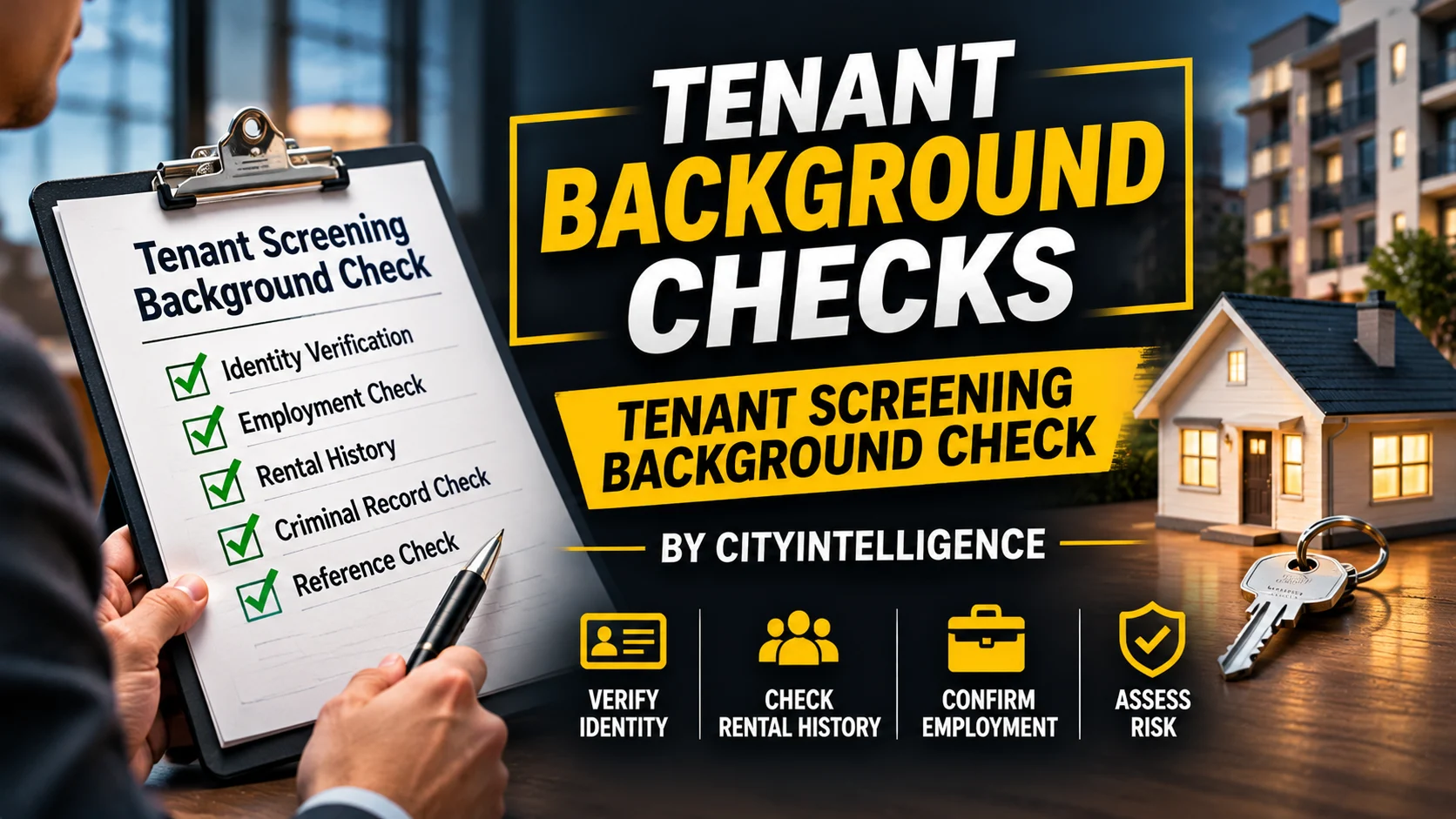
Renting a property is an important financial decision for landlords and property owners. Finding a suitable tenant is not only about receiving monthly rent but also about maintaining the property, protecting assets and ensuring a smooth landlord-tenant relationship.
However, choosing a tenant without checking their background can sometimes lead to problems such as delayed rent payments, false personal information, property damage or disputes. This is why tenant background checks have become an important part of the property rental process.
A proper tenant screening process helps landlords verify relevant applicant information before finalising a rental agreement. It provides a better understanding of a prospective tenant’s identity, residential history and other relevant details.
Cityintelligence recognises the importance of responsible background verification and reliable information when making property-related decisions.
In this article, we will explain what tenant background checks involve, why landlords need them, the different types of verification and how a professional screening process can help property owners make informed rental decisions.
What Are Tenant Background Checks?
Tenant background checks are verification procedures used by landlords and property owners to check relevant information about individuals applying to rent a property.
The purpose is to confirm whether the details provided by a prospective tenant are accurate and to identify any relevant concerns before entering into a rental agreement.
A tenant screening background check may include several types of verification depending on the landlord’s requirements and applicable laws.
Common checks include:
- Identity verification.
- Address verification.
- Employment verification.
- Professional background checks.
- Previous rental history verification.
- Reference checks.
- Relevant criminal record checks, where legally permitted.
These checks help landlords assess rental applicants using verified information rather than depending entirely on application forms or verbal statements.
The exact screening process may vary depending on the property, applicant profile, landlord’s requirements and applicable privacy regulations.
Why Are Tenant Background Checks Important for Landlords?
Renting a property involves financial and legal responsibilities. A tenant becomes responsible for using the property according to the agreed rental terms.
Without appropriate screening, landlords may have limited information about the person renting their property.
Here are some important reasons why tenant background checks matter.
1. Helps Verify Tenant Identity
Identity verification is one of the first steps in the tenant screening process.
Landlords should confirm that the applicant’s identity details match the documents and information provided.
This can help reduce the risk of identity-related misrepresentation and ensure that rental documentation contains accurate details.
2. Helps Assess Rental-Related Risks
A tenant’s rental history and relevant references may provide useful information about previous rental arrangements.
For example, a landlord may want to verify previous addresses or contact authorised references to understand the applicant’s rental history.
Such checks should be conducted fairly and should not rely on unverified allegations.
3. Supports Property Security
Property owners naturally want to protect their buildings, apartments and other assets.
Verifying relevant tenant information can support responsible property management and help landlords make more informed decisions.
However, background screening should be considered alongside property inspections, rental agreements and other appropriate safeguards.
4. Helps Verify Employment Information
Employment verification can help landlords confirm information about an applicant’s current professional background.
Depending on the applicant’s consent and the verification process, this may include checking employer details, employment status or other relevant information.
Employment verification is not a guarantee of future rent payments, but it can provide additional context when assessing a rental application.
5. Encourages Responsible Rental Decisions
A structured screening process allows landlords to assess applicants using consistent criteria.
Instead of making decisions based on assumptions or personal impressions, landlords can consider relevant and verified information.
This supports a more transparent rental process.
Different Types of Tenant Screening Background Checks
Tenant screening includes multiple verification activities. Landlords can select checks based on their property requirements and the nature of the rental arrangement.
1. Tenant Identity Verification
Identity verification confirms the applicant’s identity using appropriate documents and authorised verification methods.
Depending on the process, this may involve checking:
- Full name.
- Identity document details.
- Photograph and relevant identification information.
- Other details provided in the rental application.
Accurate identity verification helps ensure that the landlord has the correct information for preparing rental documentation.
2. Address Verification
Address verification helps confirm the residential information provided by a prospective tenant.
This may involve checking relevant address documents or using other permitted verification methods.
Address verification can help landlords maintain accurate tenant records and confirm the applicant’s stated residential details.
3. Employment Verification
Employment verification helps confirm relevant professional information provided by the tenant.
Depending on the agreed scope, the verification may include:
- Employer name.
- Employment status.
- Job designation.
- Relevant professional details.
This check can provide additional information about the applicant’s employment background.
Landlords should avoid making decisions based solely on employment type or occupation.
4. Previous Rental History Verification
Previous rental history can provide useful information about an applicant’s earlier rental arrangements.
With appropriate consent, landlords may contact previous property owners or authorised references to verify relevant details.
Questions may relate to the rental period, property occupancy and whether the previous rental arrangement was completed according to its terms.
Any information received should be assessed fairly and in context.
5. Criminal Record Verification
Some landlords may consider criminal record checks as part of their tenant screening process.
Such checks must be conducted through lawful and authorised sources, subject to applicable privacy and data protection requirements.
The relevance of any information should be assessed carefully. A background check should not automatically result in rejection based on an unverified allegation or information unrelated to legitimate rental considerations.
6. Reference Verification
Reference verification involves contacting individuals who have been provided as references by the applicant, with appropriate permission.
These references may include previous landlords or other relevant professional contacts.
Reference checks can help landlords understand the applicant’s previous rental experience and verify specific information.
How Does a Tenant Screening Background Check Work?
A professional screening process generally follows a structured approach to ensure that relevant information is collected and reviewed properly.
The following steps explain how tenant screening commonly works.
Step 1: Collect Tenant Information
The process begins with collecting the information required from the rental applicant.
This may include identity details, current address, employment information and previous rental details.
Landlords should collect only information that is necessary for the stated screening purpose.
Step 2: Obtain Consent and Authorisation
Before conducting background checks, landlords or verification providers should obtain appropriate consent or other valid legal authorisation as required.
Applicants should understand what information will be checked and how their personal information will be used.
Step 3: Verify Submitted Documents
The submitted documents and details are reviewed through relevant verification methods.
Depending on the scope, this may involve identity checks, address verification, employment confirmation and reference enquiries.
Step 4: Conduct Relevant Background Checks
Once the required information is available, the agreed background checks are conducted through appropriate sources.
Only checks relevant to the rental decision should be included.
Step 5: Review Verification Findings
The findings are examined to identify inconsistencies or information that requires further clarification.
Not every discrepancy indicates dishonesty. Some differences may result from outdated documents, administrative errors or incomplete records.
Applicants should be given a reasonable opportunity to clarify disputed information.
Step 6: Prepare the Screening Report
The findings are documented in a structured report.
Depending on the agreed scope, the report may include:
- Verification activities completed.
- Information successfully verified.
- Discrepancies requiring clarification.
- Unavailable or incomplete information.
- Relevant observations.
Step 7: Make an Informed Rental Decision
The landlord reviews the findings alongside the rental application, property requirements and other relevant considerations.
The final decision should be fair, consistent and compliant with applicable laws.
Common Problems Landlords May Face Without Tenant Screening
Skipping the verification process may create avoidable difficulties for property owners.
Some common concerns include:
Incorrect identity information: Landlords may receive inaccurate or incomplete personal details from applicants.
Unverified employment claims: Professional information provided during the application process may not always be accurate.
Incomplete rental history: Property owners may have limited information about previous rental arrangements.
Potential financial disputes: Unclear applicant information can make rental decisions more difficult.
Property management concerns: Without proper documentation, landlords may face additional challenges managing tenant records and rental responsibilities.
A structured tenant screening process helps address these concerns before the rental arrangement begins.
Benefits of Hiring Professional Tenant Background Verification Services
Conducting every verification activity independently can require time, coordination and access to appropriate information sources.
Professional tenant verification support can help landlords organise the screening process more effectively.
Reliable Information Verification
Professional verification procedures focus on checking relevant details through appropriate sources rather than relying entirely on applicant declarations.
Better Time Management
Coordinating identity, employment and reference checks can require administrative effort. A structured verification process can make these activities easier to manage.
Confidentiality
Tenant screening involves personal information. Professional handling should include secure document management, restricted access and appropriate data protection practices.
Structured Reporting
A clear report helps property owners understand which details were verified and whether any information requires clarification.
Consistent Screening Procedures
Using a standard screening process for applicants can help landlords maintain fair and consistent rental practices.
Why Choose Cityintelligence for Tenant Background Verification?
Selecting a suitable tenant requires careful consideration and access to relevant information.
Cityintelligence recognises the importance of background verification in helping individuals and organisations make informed decisions.
For landlords and property owners considering tenant background checks, a structured verification approach can help confirm relevant applicant details and support responsible rental management.
When considering professional verification assistance, landlords should discuss their specific requirements, the types of checks available, the verification process and the applicable legal boundaries.
The focus should remain on accurate information, confidentiality and fair assessment of every rental applicant.
Whether you are renting an apartment, an independent house or a commercial property, it is important to establish clear screening requirements before finalising the rental arrangement.
Cityintelligence emphasises the value of responsible verification practices when handling sensitive personal information.
Best Practices for Effective Tenant Screening
Landlords can improve their tenant screening process by following a few practical steps.
Create a standard screening policy: Decide which verification checks are relevant for your rental property and apply consistent criteria to all applicants.
Verify documents carefully: Check the accuracy of identity, address and other relevant documents through appropriate methods.
Obtain proper consent: Explain the screening process and obtain necessary authorisation before conducting checks.
Protect personal information: Store tenant documents securely and restrict access to authorised individuals.
Review discrepancies fairly: Give applicants an opportunity to clarify inaccurate or incomplete information.
Maintain proper records: Keep relevant rental documents and verification reports according to applicable retention and privacy requirements.
These practices can help landlords maintain a more organised and responsible rental process.
Frequently Asked Questions About Tenant Background Checks
1. What are tenant background checks?
Tenant background checks are verification procedures used by landlords to confirm relevant information about rental applicants. These may include identity, address, employment, rental history and other appropriate checks.
2. Why should landlords conduct tenant screening?
Tenant screening helps landlords verify applicant information, identify relevant discrepancies and make more informed rental decisions before entering into an agreement.
3. What is included in a tenant screening background check?
A tenant screening background check may include identity verification, address checks, employment verification, previous rental history, reference checks and criminal record checks where legally permitted.
4. How long does tenant background verification take?
The time required depends on the number of checks, the availability of records and the response time of relevant verification sources. Some checks may be completed quickly, while others can take several working days or longer.
5. Is tenant background verification necessary before renting a property?
It is a useful precaution for landlords who want to verify relevant applicant information before finalising a rental agreement. The specific checks should be proportionate to the rental requirements and comply with applicable laws.
6. Can landlords check a tenant’s criminal record?
Criminal record checks may be possible through lawful and authorised sources, subject to applicable legal restrictions. Landlords should ensure that any information considered is accurate, relevant and handled fairly.
7. Can a professional agency help with tenant verification?
Yes. A professional verification provider may assist with coordinating relevant checks, verifying submitted information and preparing screening reports, depending on its available services and legal authorisations.
8. What documents are generally required for tenant verification?
Commonly requested documents may include identity proof, address proof, employment details and previous rental information. The exact requirements depend on the screening scope and applicable regulations.
Conclusion
Renting a property involves more than finding someone willing to pay the monthly rent. Landlords also need to consider property security, accurate documentation and responsible tenant selection.
Tenant background checks help property owners verify important applicant information before entering into a rental arrangement. From identity and address verification to employment and rental history checks, a structured screening process can support better-informed decisions.
A professional tenant screening background check can also help landlords organise verification activities and maintain clear applicant records.
Cityintelligence recognises the importance of accurate information, confidentiality and responsible verification practices in the property rental process.
If you are planning to rent your property, consider discussing your tenant verification requirements with Cityintelligence to understand the available background screening options.

Rajeev Kumar – CEO, City Intelligence Pvt Ltd
Rajeev Kumar running a leading private detective agency in Delhi with over 24+ years of experience in private and corporate investigations. As a certified member of APDI and WAD, he has successfully solved 4,700+ complex cases across India. His expertise in undercover operations, corporate fraud detection, and advanced surveillance techniques makes him one of the most trusted detective experts in India.
Media Coverage:
Mid-Day Feature
Startup Story Feature
India Saga News
YouTube Interviews:
Exclusive Interview on Investigations
Case Study & Success Stories
Connect with Rajeev Kumar:
LinkedIn
City Intelligence Official Website
